When renovating a living room or rethinking the layout of a room in 2024, the first instinct is often to look for a color palette or a dominant style. This year’s home and decoration trends go further: they touch on materials, building standards, and even the connected systems installed behind the walls.
Bio-based paints and indoor air quality: what is changing concretely
On renovation sites, there is a clear shift towards certified bio-based paints. Labels like Argile du Velay or the European Ecolabel are gaining ground, supported by feedback from interior architects who measure an improvement in air quality after application. The ADEME report on bio-based materials in construction, published in March 2026, confirms this growing adoption.
In practice, switching to a bio-based paint does not change the application process. The drying time is comparable, as is the durability. The difference lies in the volatile organic compounds: they are significantly reduced, which is particularly important in bedrooms and poorly ventilated spaces.
To keep up with the evolution of the decoration and housing sectors, one can consult professional trade shows like Habitat Expo, which bring together manufacturers and artisans around these new materials.
RE2020 extended to renovations: impact on interior decoration choices
Since January 2026, the extension of RE2020 to interior renovations requires the integration of a carbon footprint calculation in decoration projects. This is a turning point for anyone considering renovating a floor, installing wall coverings, or changing built-in furniture.
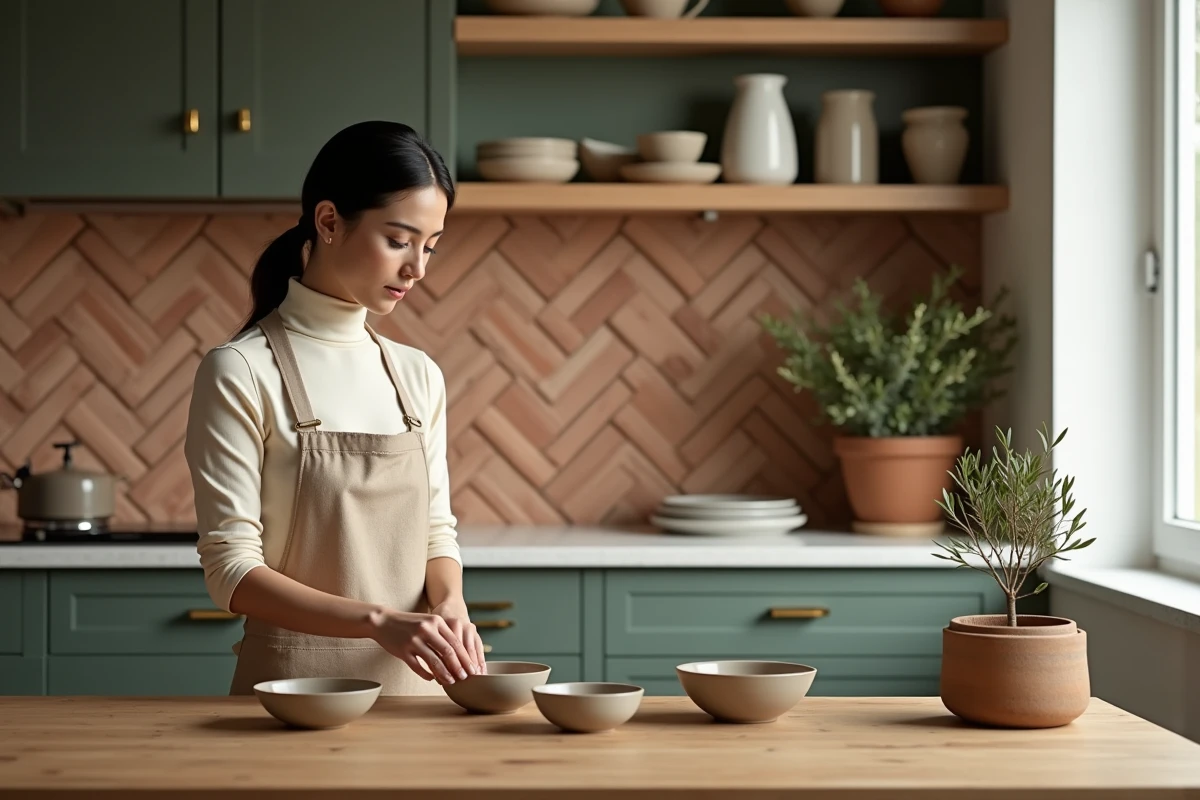
The first visible effect: synthesized plastics are declining in favor of FSC-certified wood. PVC-based laminate floors, resin wall panels, decorative elements in acrylic—these products are becoming harder to justify in a renovation carbon assessment.
For an interior decoration project in 2024-2026, this means making different choices:
- FSC-certified solid or engineered wood flooring is increasingly replacing vinyl floors in living spaces
- Lime or clay-based coatings are substituting for petrochemical solvent paints, even in humid rooms
- Standard particle board furniture is losing ground to solid woods or low formaldehyde emission panels
Feedback varies on this point depending on regions and available artisans. Not all local suppliers have yet adapted their catalogs, which can extend supply times.
Open-source home automation: Home Assistant versus proprietary solutions
The 2024 decoration trend is not limited to visible surfaces. Behind the walls, open-source home automation systems like Home Assistant are gaining ground over proprietary solutions. The Home Automation Observatory, in its April 2026 study on residential home automation in Europe, notes this growing preference among individuals.
The reason is simple: you can control lighting, heating, and shutters from a single interface without being locked into a manufacturer. The entry cost is also lower than with systems from Legrand or Somfy.
Specifically, installing Home Assistant on a small home server takes a few hours of configuration. Integration with connected bulbs, thermostats, or air quality sensors is documented by an active community. For a house or apartment project, home automation becomes a design element in its own right: you choose recessed switches, discreet sensors, and control screens integrated into the wall.
Modular wabi-sabi: adapting Japanese aesthetics to compact spaces
The report from Salone del Mobile 2026 on global influences in design highlights an emerging trend in Europe: modular wabi-sabi. The idea is to transpose the aesthetic of Japanese imperfection into small urban housing.
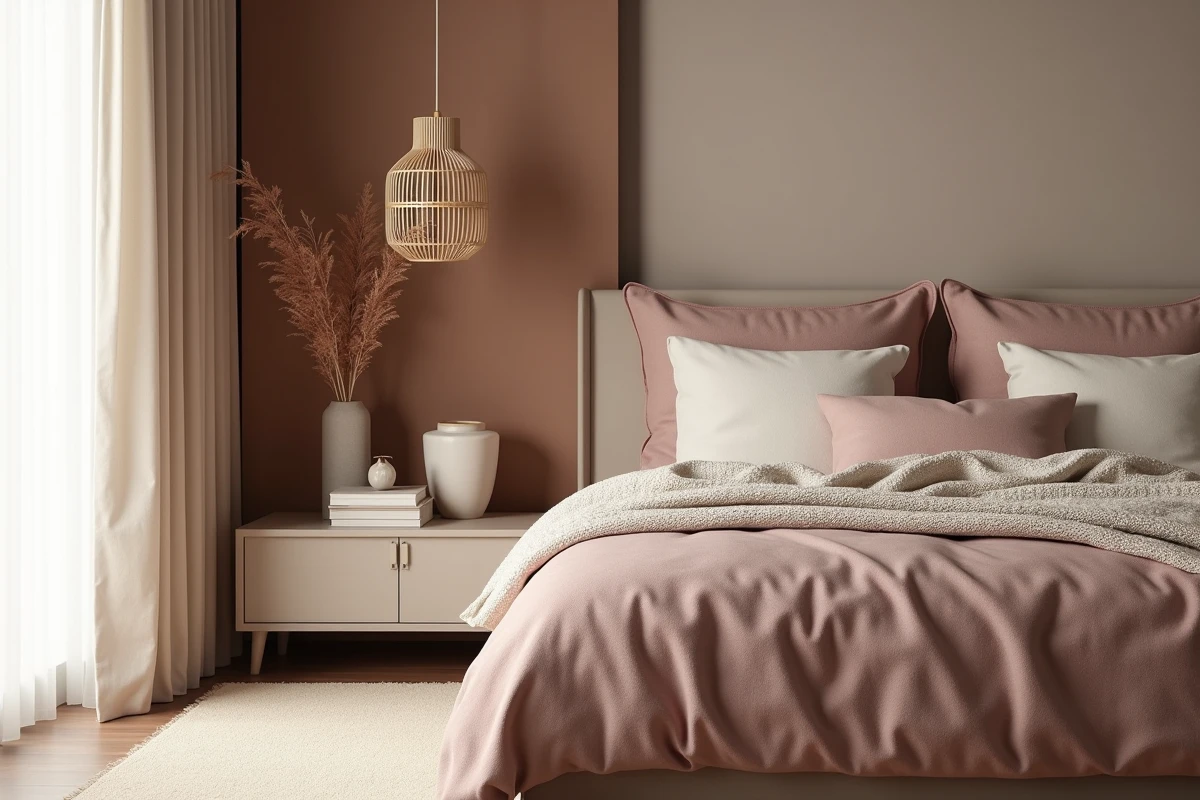
This is not about recreating a traditional Japanese interior. The approach is functional: furniture with simple lines, raw textures (unvarnished wood, artisanal ceramics, crumpled linen), and especially modular pieces that adapt to a limited space.
In a studio or a one-bedroom apartment, this translates into open shelves made of raw wood that serve as partitions, low seating that frees up visual volume, or unbleached natural textiles that bring warmth without overwhelming. The style works particularly well in living spaces where one seeks to create a sense of space without resorting to cold minimalism.
Earthy colors and mixed textures: the most accessible decoration trend
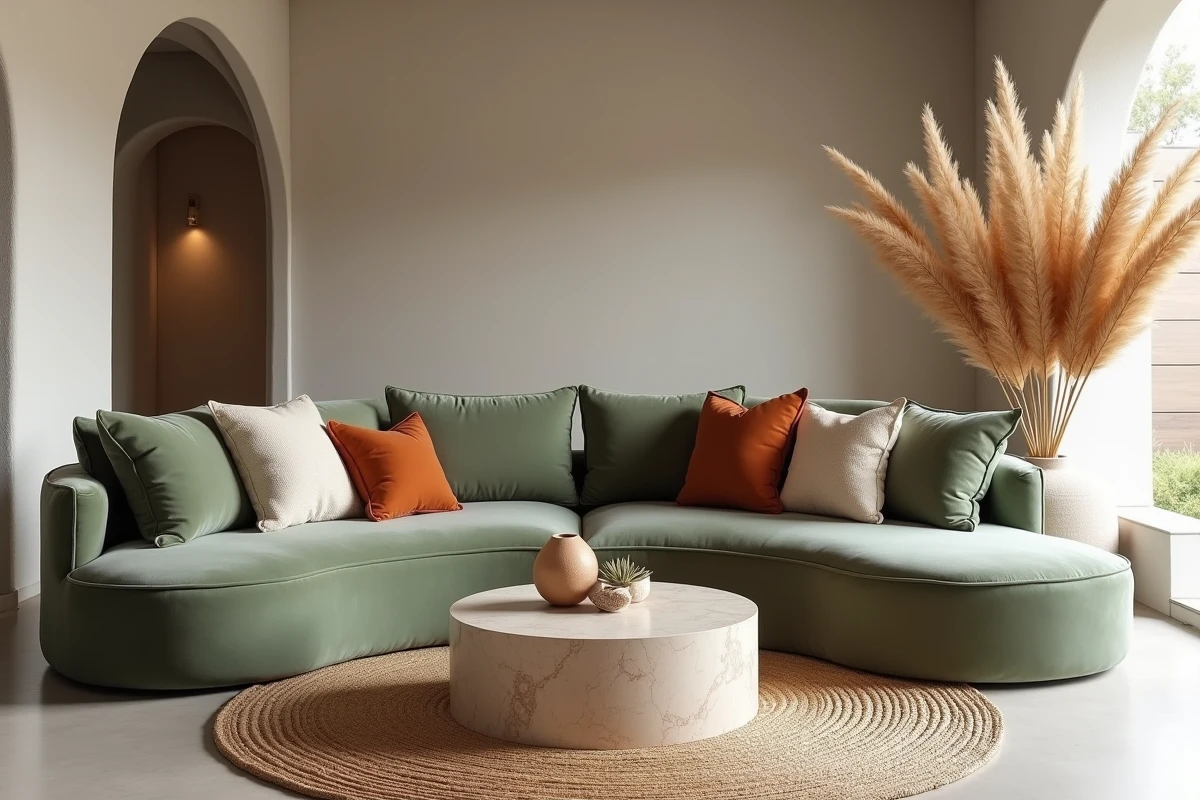
Among the 2024 decoration trends that are easiest to adopt without major renovations, earthy colors remain dominant. Terracotta, ochre, sage green, warm brown: these shades naturally pair with the bio-based materials and certified wood mentioned earlier.
The novelty lies in the deliberate mixing of textures within the same room:
- A lime-coated wall paired with solid wood flooring and raw linen cushions
- Organic patterned wallpaper on one wall, combined with artisanal ceramic lighting fixtures
- Thick cotton curtains facing brushed metal furniture to create a tactile contrast
This play of materials replaces the search for a uniform style. Elements are assembled based on their texture rather than their color or era.
The home and decoration trends of this 2024-2026 period share a common thread: they respond to real constraints, whether related to thermal regulations, air quality, or optimizing a small space. The choice of a material, a connected system, or a color palette now stems as much from a normative framework as from an aesthetic preference.