When you enter a reception hall, the impression is made in just a few seconds. What makes the difference between a mundane space and a memorable venue is rarely a single spectacular accessory. It’s the coherence between the furniture, fabrics, lighting, and small table details. Event decoration equipment is not just a shopping list: each element interacts with the others, and some technical choices condition everything else.
Fire Reaction of Fabrics and Decorations: The Criterion That No One Checks Early Enough
Before choosing tablecloths, drapes, or wall hangings, one question arises: is your event venue classified as ERP? If so, the requirements focus on the fire reaction of the materials used for stands, canopies, and decorative partitions.
In trade shows or exhibitions (ERP type T), the regulations impose specific thresholds. A beautiful fabric that is not classified may be rejected on the setup day. To avoid this situation, always request the fire classification report for each textile from the supplier before placing the order.
This criterion also influences the choice between purchase and rental. By browsing the equipment available on Imagin’Air Déco, you can spot items that are already compliant with the standards, simplifying compliance logistics.
Why start with this point? Because a decor that fails at the last minute forces you to rethink everything. Checking fire compliance before finalizing the aesthetics saves you from urgent replacements, which are always more costly.

Event Lighting: Building an Atmosphere in Layers
Lighting is the most underestimated lever in event decoration. It’s not just about seeing clearly. Light creates zones, guides guests, and alters the perception of the colors in the decor.
Color Temperature and Shade Rendering
You may have noticed that a white tablecloth can appear yellow under certain spotlights? This is a color temperature issue. Warm lighting (around 2,700 K) softens shades and is suitable for evening events. Neutral lighting (4,000 K) better reproduces actual colors, useful for a photo area or buffet.
Choosing the color temperature before finalizing the decor palette avoids unpleasant surprises on the big day. If your centerpieces are powder pink, a spot that is too cool will turn them gray.
Three Levels of Light to Combine
- General lighting (ceiling lights, hanging garlands) ensures basic visibility and sets the overall tone of the room.
- Accent lighting (directional spots, LED candles) highlights a specific point: cake, stage, head table.
- Ambient lighting (LED strips, lanterns, projections) adds depth and creates intimate zones in a large space.
These three layers work together. A space lit only by garlands will be warm but monotonous. Add a spotlight on the buffet and lanterns on the tables, and the room gains dimension.
Table Linen and Wall Textiles: The Visual Framework of Your Theme
Textiles often represent the largest visible surface of your decoration. Tablecloths, table runners, chair covers, and wall hangings occupy more visual space than centerpieces or flowers.
The choice of fabric depends on three concrete factors:
- The texture (linen, satin, organza, cotton) defines the style: rustic, elegant, modern, or festive.
- The weight determines the drape. A fabric that is too light will wrinkle, while a fabric that is too heavy will weigh down small tables.
- The color must be tested under the planned lighting (see previous section), not under store light.
For a wedding or birthday party, coordinated table linen visually unifies the entire space, even if the furniture is not identical from one table to another. This is the most effective trick when working with standard rental furniture.
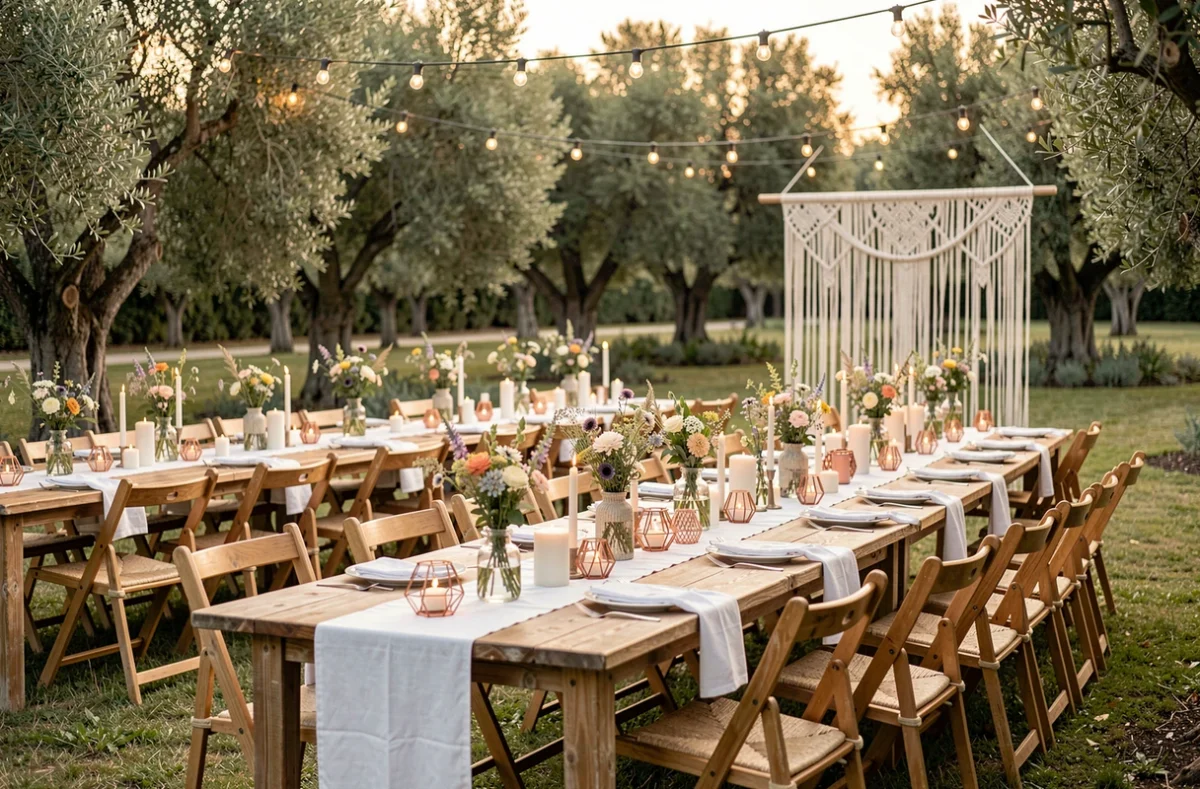
Table Decoration and Photo Elements: The Details That Create Memories
Once the lighting and textiles are in place, the table elements provide the finishing touch. Centerpieces, candles, place cards, small vases: these are what guests photograph.
Centerpieces Proportioned to the Space
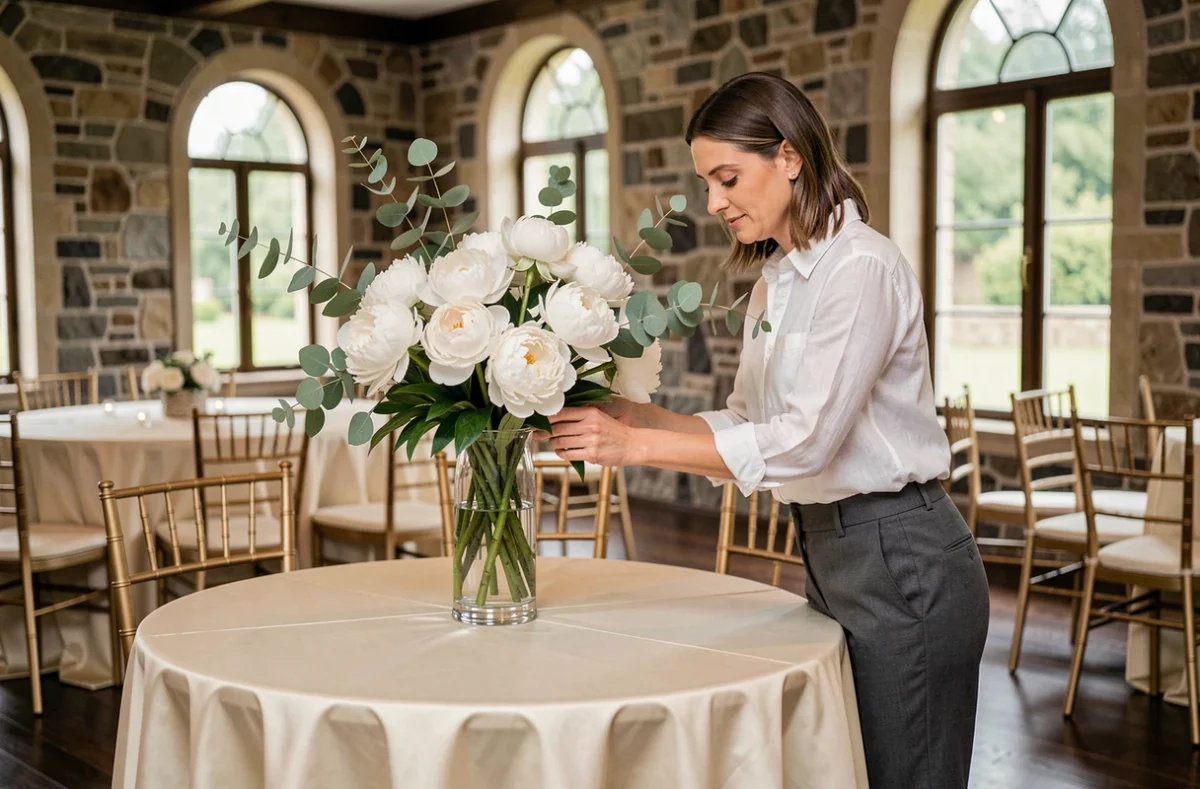
A centerpiece that is too tall hinders conversation. Too low, it disappears visually. The simple rule: either below the chin or well above the head. In between, it obstructs the view without adding verticality.
Floral arrangements remain a classic, but alternatives like lanterns, terrariums, or stacks of old books offer an original look at a lower cost.
Photo Corner and Background Decor
Planning a dedicated photo space has become common for parties and corporate events. An artificial flower wall, a giant frame, or a stretched fabric backdrop is enough to create a focal point.
The background should contrast with the likely outfits of the guests. A white backdrop works poorly if everyone is wearing light colors. Also consider front lighting, which eliminates unflattering shadows on faces.
Reuse and Storage: Thinking About Decor Beyond the Event
Reuse is not just about keeping decorations in a box. For an item to serve multiple events, you must plan for its disassembly, storage, and adaptation from the design stage of the decor. A modular signage panel, a removable photo frame, or a reusable metal arch may cost more to purchase, but they pay off over three or four occasions.
The distinction matters: reuse means using the item for the same function, not transforming it into something else. A string of lights that is used for every family event is reuse. Recycling it by stripping copper wires is recycling.
If you organize several events per year, investing in durable and modular elements reduces the overall budget. For a one-time occasion, rental remains the most reasonable solution.
The last point to keep in mind: a successful decor is not one that accumulates the most accessories. It is one where each element, from fabric to light, has been chosen based on the others and the venue. Three technical decisions made in advance (fire compliance, lighting temperature, textile palette) simplify all subsequent aesthetic decisions.