The Oriental Park of Maulévrier is not visited in the same way in May as it is in October. Cherry blossoms, vibrant maples, or night walks: each period radically changes what the Japanese garden has to offer. To choose a date, one must first know what they are looking for, as the ideal season depends less on the weather calendar than on the purpose of the visit.
Maulévrier Park Calendar: Blooming, Foliage, and Events Compared
| Period | Main Attraction | Crowd Level | Specific Events |
|---|---|---|---|
| Spring (April-June) | Cherry trees, magnolias, camellias, azaleas | Moderate to high | Hanami (cherry blossom viewing) |
| Summer (July-August) | Hydrangeas, dense greenery | High | Night walks |
| Autumn (Sept-Nov) | Maples, Kôyô / Momiji colors | Moderate | Momiji (autumn foliage) |
| Winter (Dec-March) | Bare plant structures, tranquility | Low | Limited opening, no major events |
This table summarizes the four highlights of the park. Two periods draw the most attention: spring for blooming and autumn for the maples. Summer adds a nocturnal dimension that the other seasons do not offer.
To identify the best times to discover Maulévrier Park, one must cross-reference botanical data with the events schedule, as a shift of a few weeks completely changes the experience.
Momiji in Autumn: A Distinct Experience from Spring in the Japanese Garden
Competitors often present autumn as a mere substitute for spring. However, the two seasons have nothing in common botanically or sensorially.
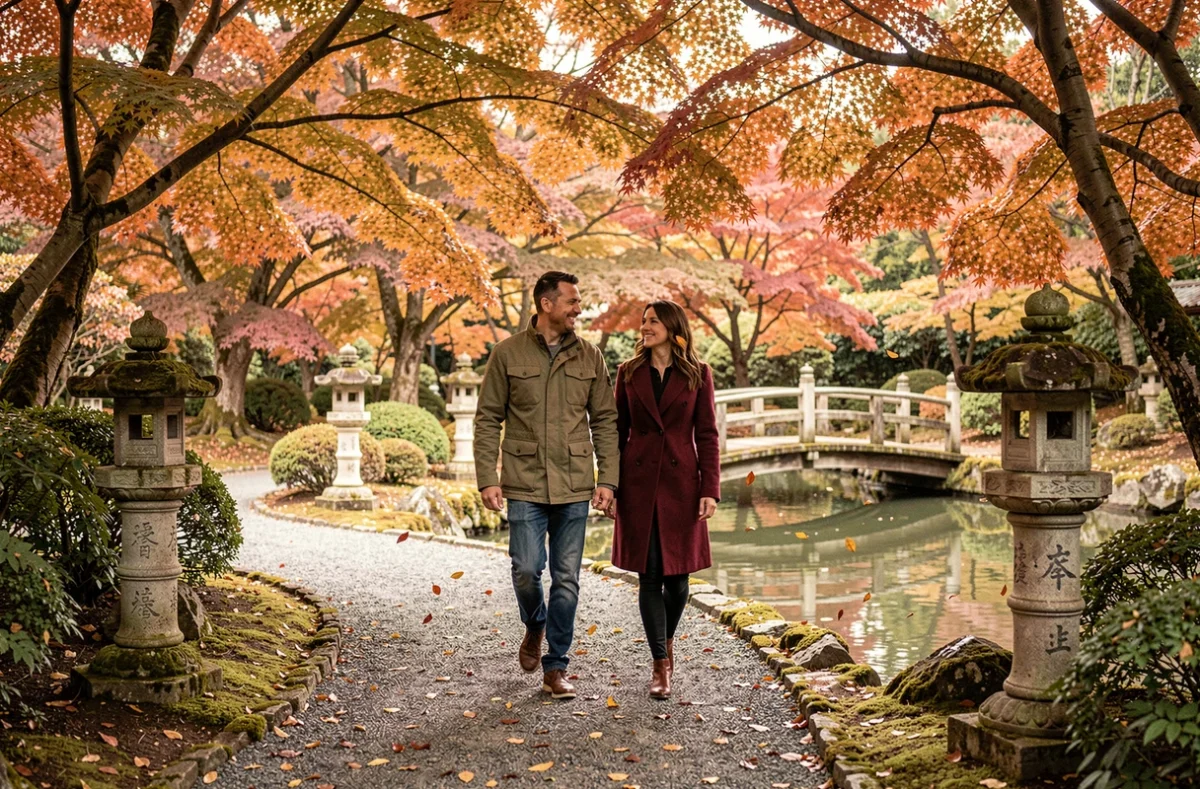
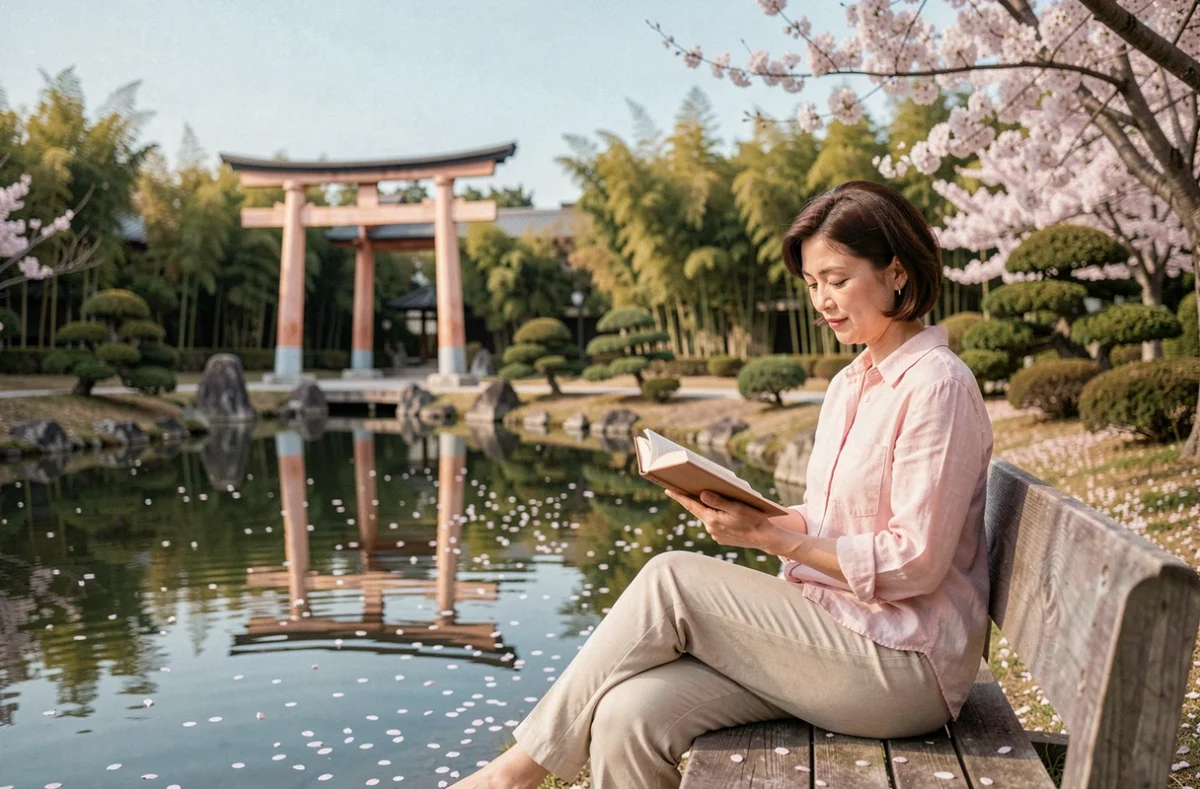
In spring, the gaze is drawn upward by the cherry trees. The pink petals create a light, almost fragile veil. Autumn reverses the perspective: it is the Japanese maples that color the park in shades of copper, red, and orange, from the ground to the canopy.
The Momiji, the autumn highlight of the park, deserves to be treated as an event in its own right. Several points distinguish it from a typical visit:
- The hours and access conditions may differ from those of the rest of the season, necessitating a check of the official schedule before booking
- The crowd during Momiji remains moderate compared to May-June, but concentrates on weekends
- The low-angle light of late season transforms the park’s photography, with reflections on the water features that summer does not allow
In summary, choosing autumn means choosing a different park, not a degraded version of spring.
Night Walks in Maulévrier Park: What Daytime Visits Do Not Show
In summer, the Oriental Park of Maulévrier offers night walks. This format changes the very nature of the visit: one no longer comes to observe plants, but to perceive an atmosphere.
The play of light reveals invisible volumes during the day. The bridges, islands, and water surfaces take on a different relief. The night route does not necessarily cover the same areas as the daytime circuit.
Before planning an evening visit, three parameters deserve verification on the park’s official website:
- The specific dates of the night walks, which do not cover the entire summer
- The necessity or not of booking in advance, as capacity may be limited
- The specific rates, sometimes different from those of daytime visits
- The weather conditions, as an overcast sky can significantly alter the light rendering
The night walks attract a different audience than that of spring. It is the only format that associates the park with an evening outing, making it interesting for visitors who are not solely motivated by botany.
Crowd Levels and Practical Conditions by Season of Visit
Spring, particularly May and June, attracts the majority of visitors. The weekends during this period are the busiest. In contrast, winter offers very low attendance, but the park’s opening is then restricted.
The difference in attendance between a Tuesday in November and a Saturday in May radically changes the comfort of the visit. For a Japanese garden designed around contemplation, calm directly influences the quality of the experience.
Three Variables to Consider Before Choosing Your Date
Weather alone is not enough. Choosing an appropriate date relies on the intersection of the objective (blooming, foliage, night), the day of the week, and the presence or absence of an event.
A visitor coming for photography should aim for a weekday in autumn when the light and low attendance combine. A visitor attracted by the festive atmosphere of Hanami will prefer a spring weekend, accepting a higher crowd level.
Consulting the park’s official agenda before any reservation remains the most useful precaution. Events like Momiji or night walks can alter usual hours, rates, and even accessible areas. A planned visit without this verification risks encountering a partially closed park or, conversely, an unexpected event that changes the pace of the stroll.