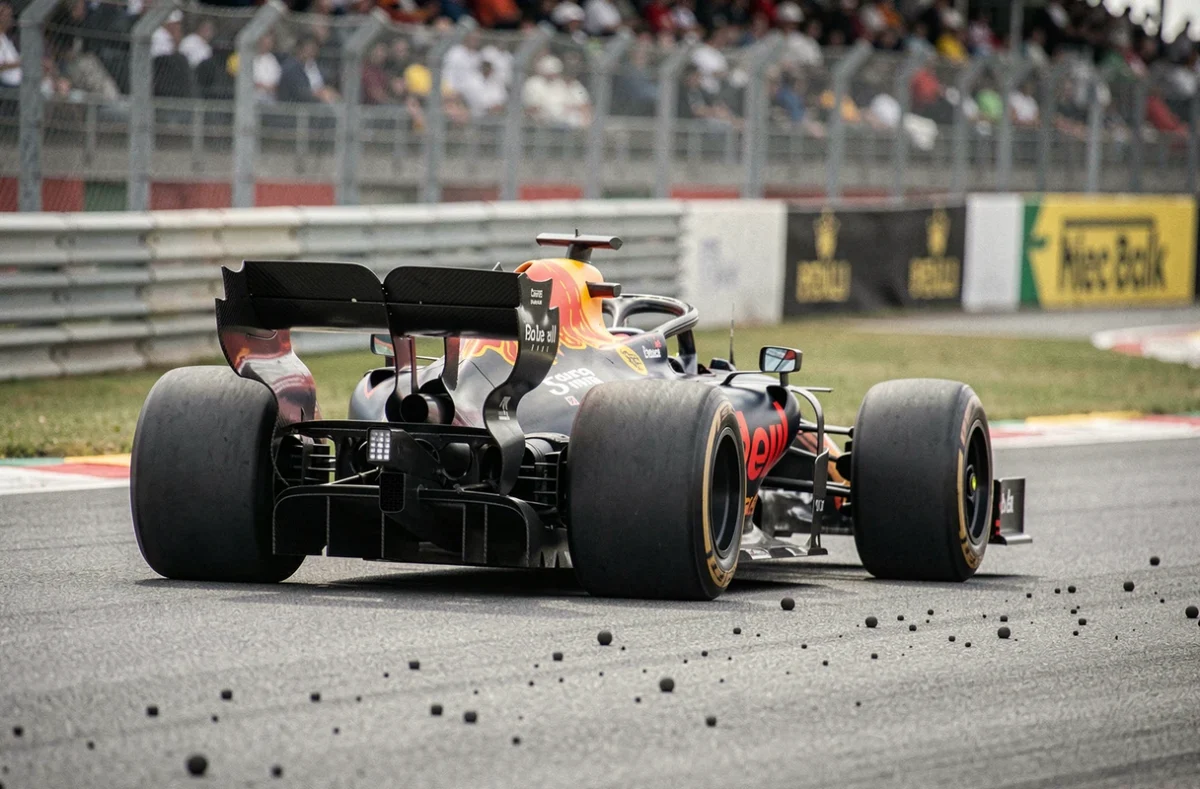
The lift and coast refers to the phase where the driver releases the throttle well before the usual braking point, then allows the car to decelerate in neutral. With the 2026 regulations, the removal of the MGU-H and the increase of the MGU-K to around 350 kW of electric power have transformed this technique into a permanent adjustment variable for energy management.
Super clipping vs lift and coast: two philosophies of energy recovery
Traditional lift and coast requires lifting off before the corner, which reduces top speed on the section leading up to braking. Super clipping takes the opposite approach: the driver stays at full throttle, but the hybrid system draws energy directly from the internal combustion engine during the straight.
The difference is evident in the GPS data. In lift and coast, the speed curve gradually bends down before the braking point. In super clipping, it remains flat longer, then drops more sharply when the battery reaches its storage limit and can no longer provide electric power.
We observe that the choice between these two methods depends on the layout. On a circuit with long straights, super clipping better preserves top speed but can cause a noticeable power loss at the end of the straight. On a twisty layout, where mastering lift and coast in F1 remains a decisive advantage, early deceleration protects the tires and smooths energy consumption throughout the lap.

Recoverable energy ceiling: the 5 MJ rule at Monza
The FIA has lowered the recoverable energy ceiling to 5 MJ per lap at Monza to limit excessive use of super clipping and lift and coast on the long straights. This decision illustrates the tension between performance and spectacle: without a ceiling, teams would have an incentive to increase recovery, even if it meant producing phases of artificially slowed driving.
The lowering of the ceiling requires finer arbitration. If recoverable energy is limited, each phase of deceleration must be optimized. An overly aggressive recovery at the beginning of the lap leaves less margin for the final sectors. The race engineer must therefore distribute the phases of lift and coast based on the elevation profile and the density of slow corners.
Direct consequence on top speed
With a ceiling of 5 MJ, the top speed at Monza is found to be lower than that achieved on circuits considered slower. This paradox can be explained: less energy recovered means less energy deployed out of Parabolica and on the main straight. Teams must then compensate with a more unloaded aerodynamic setup, which affects the downforce behavior in the chicanes.
Battery management and driving style in the race
The removal of the MGU-H has taken away a source of passive recovery that smoothed energy flows without driver intervention. In 2026, all electrical recovery goes through the MGU-K, making every braking and every lift strategically significant.
The optimal operating window of the hybrid system varies depending on how the driver approaches the deceleration phases.
- A driver with late and aggressive braking recovers more energy per braking event but puts more strain on the tires and carbon brakes.
- A driver who favors prolonged lift and coast recovers less per phase but distributes thermal load and preserves tire wear over long stints.
- Super clipping suits drivers who can manage the power loss at the end of the straight without compromising their defensive or offensive positioning.
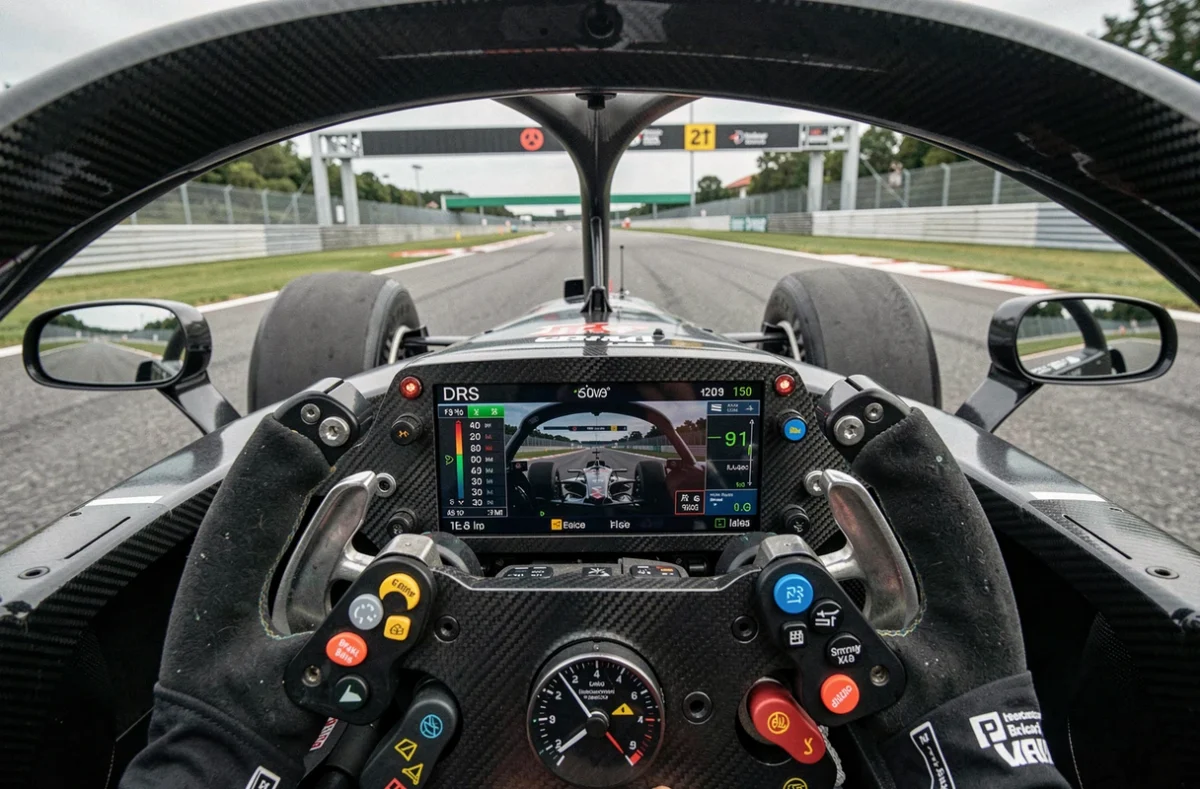
Impact of lift and coast on tire degradation in the race
Lift and coast is not just a matter of energy. Every meter traveled in free deceleration reduces the lateral and longitudinal load on the tires at the corner entry. Over a stint of several dozen laps, this cumulative reduction can shift the moment when degradation becomes critical.
We recommend not separating energy management from tire strategy. A team that chooses to minimize lift and coast at the beginning of a stint gains time per lap but risks reaching the degradation cliff sooner. Conversely, excessive lift and coast protects the tires but concedes time on the straight, making it easier for pursuers to use DRS.
The compromise varies by compound
Soft tires poorly tolerate high-energy corner entries, making lift and coast more beneficial on these compounds. Hard tires, more thermally resistant, allow for reduced phases of early deceleration without significant penalty on stint duration.
The track engineer adjusts the level of lift and coast lap by lap via radio. Coded messages asking to “manage” or “push” actually translate to changes in the recovery percentage and the lift-off distance before each braking zone. The driver executes a dynamic energy mapping, not just a simple throttle modulation.
The 2026 regulations have shifted the performance focus towards hybrid management. Lift and coast, far from being a mere economy reflex, functions as a strategic tool that links energy, tires, and aerodynamics in every racing decision. The FIA’s adjustments to the recovery ceiling show that the balance between spectacle and technical optimization remains an ongoing challenge.